Set Up a Small Entryway That Stays Easy to Walk Through
Build a compact entry around door swing, a dry path, reachable storage, and the objects you actually carry home.
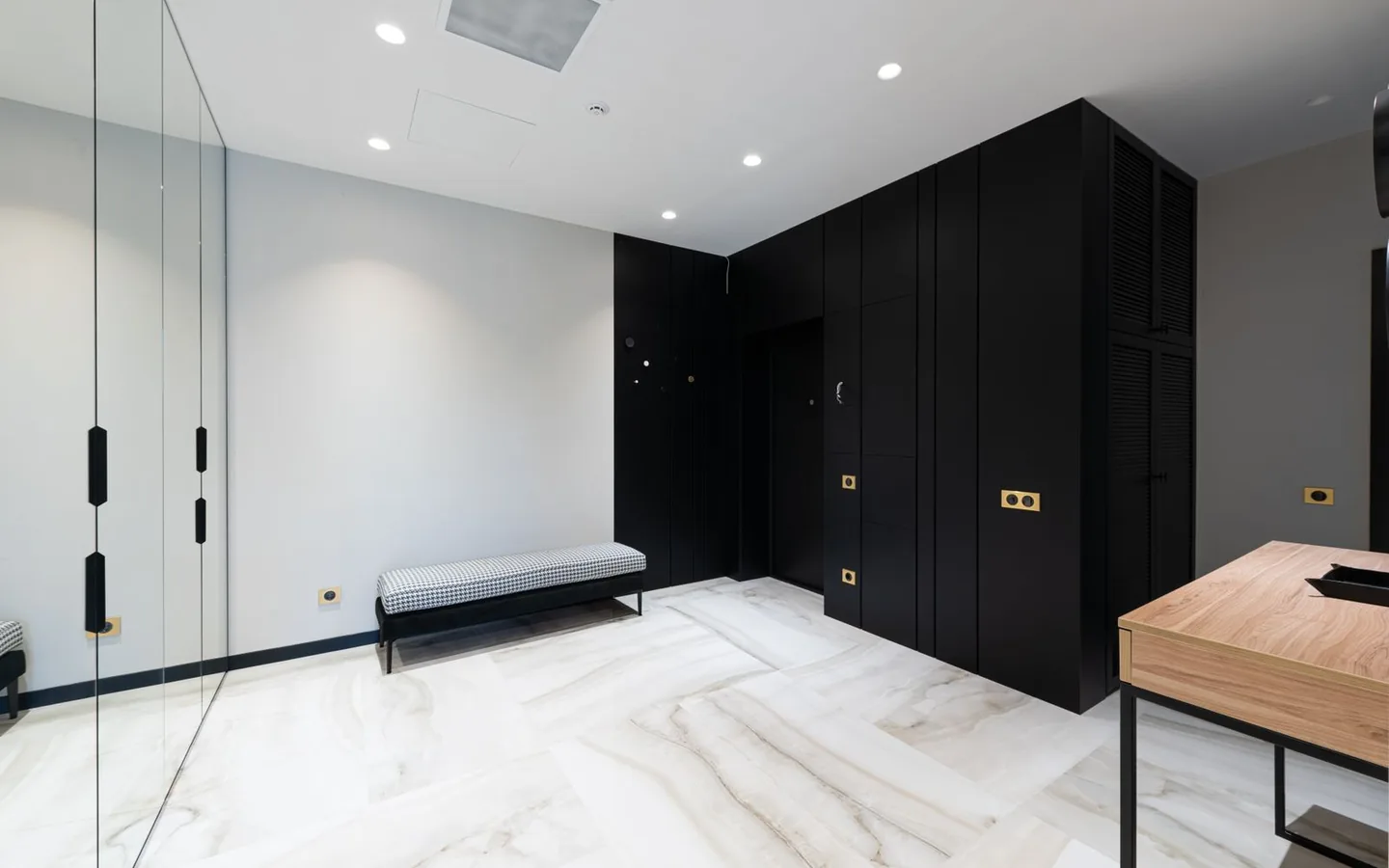
Protect a clear route through the open doorway first. Put keys, coats, and wet shoes where the act of putting them away takes one move, and keep overflow supplies outside the entry.
Do the arrival with your hands full
Stand outside your door with the things you normally carry, then enter the way you usually do. The problem will show up quickly. A shopping bag may have nowhere to land while you take off a coat. A tote with a long strap may slip off its hook into the path. Children may be able to open a shoe drawer only when everyone else has moved through. If the door itself hits a chair, the rest of the furniture might be doing very little good. List the objects that cause the first awkward movement, and put those first on your planning sheet.
Run the same sequence in reverse. What does someone pick up when leaving? A key, an umbrella, and a dog lead need very little room, yet they work differently when someone is holding a phone. A low, broad cabinet may be so far from the handle that the person always returns to the kitchen for keys. A little tray at hand height might solve the movement with no larger storage project. Focus on the actual exchange between outdoors and indoors. This makes it easier to give the entry a purpose that will survive the first week after it is organized.
Reserve the space doors and people take
On a diagram, mark the edges of the opened front door, any adjacent door, and the path through the area. Add the depth of furniture with a door or drawer open. Identify who uses the route with a stroller, shoes in hand, or a bag. A plan with a cabinet drawn as a closed rectangle can look spacious while its open position makes it impossible to pass. Measure the remaining route at the most awkward point. A handle that projects at hip height can be more troublesome than a similar projection close to the foot of a deep piece of furniture.
Test a proposed cabinet depth before ordering. A box placed along the wall, a paper outline, or a small existing table can represent the lost space for an afternoon. Notice where people step as they close the door and whether the route changes with the lights out. If the entry forms part of an accessible or shared route, check the relevant requirements before changing it. Verify with the building or property owner what can be attached or changed. A freestanding piece can be convenient, provided it is stable and safe for the household and used according to the manufacturer's instructions.
Use the smallest landing place that stays useful
A landing surface only needs to hold items long enough to complete the next motion. A shelf the size of a notebook can catch keys and a phone. A shallow compartment can take outgoing mail or sunglasses. A bag coming in with groceries deserves a wider surface if the current habit involves setting it on the floor while the kitchen door is opened. Observe which object needs support and at what height. Specify the height from the standing position that actually works, or from a comfortable seated position if that is how a member of the household uses it.
Decide what cannot live there permanently. Spare chargers, bulk pet supplies, and packages waiting for a return each need their own destination if the landing shelf also holds keys. Place a small tray where it is easy to lift out for cleaning. Some people keep keys in a bag and may use a spare clip or a deliberately shallow pocket instead. If the surface is visible from the front door or a ground-floor window, choose a less conspicuous spot for keys and other personal items. Give visitors a clear place to put down something they bring without exposing everyday household contents.
Establish the wet side of the threshold
A wet coat needs somewhere to drip and spread out, and wet shoes need somewhere to sit while they dry. A bench with fabric above an uncovered shoe rack may create work whenever people arrive in the rain. See whether a tray or washable mat can fit near the actual turning point. Leave enough space to take practical steps on the mat without preventing the door from opening. If muddy boots will be kept in an enclosed cabinet, plan what happens before they can go inside. A small spare space for drying can be more effective than a large shoe cabinet that people avoid using.
Decide whether a bag hangs in the dry zone or shares hooks with coats. A tall hook may be comfortable for a long coat and difficult for a child to reach. A bag that hangs at adult waist height can project into the route more than it did when the hook was empty. Put a representative load in place before making permanent attachments. If a rental or fragile wall restricts fixing, discuss compatible options and their limits. Avoid relying on lightweight accessories to support heavy concentrations of wet clothing. Give the busiest items enough room to be put away safely with one hand.
Plan a sitting place only if the routine calls for one
A seat can make getting shoes on much more comfortable. It doesn't need to stretch across the entire wall. Test where knees and elbows sit and leave room for someone to pass if that happens in your home. A short bench that clears the door may feel better than a deep storage seat positioned too close to it. If the best available spot is round a corner, a stable seat just outside the immediate entry can work well when shoes are stored near it. Try the movement in one direction and then the other before ordering a piece that combines seating and storage.
Think about the storage below it in use. An open shelf is easy to scan and may spread grit onto the floor underneath. Drawers hide mess and need room to pull out. Hinged lids need people to stand, move the things on top, and open the lid to reach the contents. That arrangement suits less frequently used items better than the shoes someone puts on each morning. Consider a bench with a small open place for the daily pair and reserve closed storage for clean spares. Measure those shoes first, especially pairs whose upper part will not fit below a shallow shelf.
Let vertical storage follow reach
Tall storage is valuable in a small room when the contents are light and infrequent. Place seasonal hats high if the people taking them down can do so safely, and keep everyday items at a comfortable height. An open row of hooks catches coats quickly but reveals everything. A small closed cupboard can hold longer items, provided its hinges and door arc do not turn a minor convenience into a circulation problem. Put accessories where the person using them sees them when making the next decision. A dog lead by the door generally needs a different position from a brush used after returning home.
A mirror can answer a last look and reflect light through a dark hall. Test its position in relation to the opening door, nearby lighting, and the view it will reflect. A mirror hung directly across from open storage may double the apparent clutter. A smaller mirror a little further inside might offer a better view without drawing attention to the busiest area. Mount it using the appropriate fixings for the surface and weight, and take care around an opening door. If glare makes it hard to use, adjust the light or look for a different position before committing to a larger pane.
Decide what enters and when it leaves
Small entries work better when they hold the active rotation. Count the pairs of shoes, coats, and bags in use in an ordinary week. Store seasonal pieces or spares elsewhere if the household has another appropriate place for them. Identify where items temporarily in transit will go. A parcel waiting to be opened can live on a small shelf only if someone checks the shelf regularly. Separate frequently used household items from things that belong to a project, a guest, or a shop return. Repeating a simple reset once a week may be enough to keep the approach clear.
Set out a basic provision for a guest or two. Leaving even one peg or dry corner free means that visitors have somewhere to put a bag without borrowing another household member's hook. If the entry is tiny, instructions such as coats go just down the hall can be entirely practical. A visible route usually matters more than a display of containers. Remove organizers that create another layer to open or a long reach for an ordinary item. The pieces that make the room easier to use can stay simple in appearance because they have a clear job.
Give the arrangement a rainy-day trial
Wait for a genuine test after the first tidy afternoon. The first week that involves errands, rain, or returning home after dark will reveal whether there is enough light to find a key and whether all users can hang a wet coat without blocking the door. Photograph the space before tidying and compare the position of items with the position of their planned storage. Wherever things repeatedly land, ask whether the container is in the wrong place or demands an unnecessary motion. A pair of shoes left beside the cupboard may simply need an open shelf at the right point.
Make one change at a time if the corner still does not work. Move the tray to the side used most often, put a hook within reach, or put the largest bag directly beside the route it follows. Buy a wider piece only if the current arrangement fails for a reason that width solves. A good small entry rarely looks spare while several people are actively arriving, but it can become orderly again with a few ordinary movements. Judge the finished plan by that reset, by the ease of closing the door, and by whether the next person has somewhere dry to stand.