Compare Countertop Materials Using Your Real Kitchen Habits
A practical way to compare stone, engineered surfaces, laminate, wood, and other worktops using care, details, and installed cost.
Compare the exact product and installed design against your daily exposure to heat, water, acids, and impacts. Check seams and sink details, ask what can be repaired, and price the complete job before choosing.
A sample should survive a conversation about dinner
Think through the last meal you cooked when the kitchen got crowded. Where did the hot dishes go? Which spot held the cutting board? Was there a counter free within reach of the sink? These questions tell you more about the useful life of a countertop than a picture of an untouched island. A surface with a little texture may improve the appearance of a busy kitchen while requiring attention around a heavily used sink. A dramatic material behind a row of appliances might never be seen from a useful angle. Write down how you expect the whole work area to function before looking at samples.
Separate events that occur occasionally from the ones that happen every day. Forgetting to use a trivet once in a while calls for a practical place to store trivets within reach. Cutting citrus directly on a counter almost every morning makes care requirements more central. Think about likely accidents, such as chipping an exposed edge when lifting a heavy pot past the dishwasher. People in the same home may have different expectations. Ask the person who normally wipes the kitchen down whether a new cleaning routine would be reasonable. The goal is choosing a surface both cooks and cleaners are willing to live with.
Inspect natural stone by the slab
Natural stone is appealing for the way its pattern changes across a kitchen. Ask what the actual material is and how the particular surface is finished. The appearance of the slab at a supplier may be different under the light and viewing angles in a home. Walk the slab with someone who can explain where cutouts and seams could go. If a visually distinctive band crosses the sink opening, see whether that will remove something you liked about the stone. Compare adjoining pieces where an island joins a larger perimeter or a backsplash rises from the worktop.
Care depends on the stone. Marble and other acid-sensitive materials can develop dull marks when exposed to substances such as citrus or vinegar. This surface change is called etching and differs from a stain. A sealer recommended for a particular stone can help with staining and still leave the material subject to etching. Other stone options have different behavior, even within a broad group sold under a familiar name. Request cleaning, heat, and sealing advice for the exact slab or material from the supplier. If character developing over time bothers you, try comparing a different material alongside that stone before designing around it.
Read the instructions for engineered surfaces
Engineered quartz, porcelain slabs, and solid surface are distinct products. The right comparison starts with data about use and care for the actual line. Ask whether the maker calls for protection from hot cookware, what the finish can be cleaned with, and how scratches, chips, or scorch marks would be handled. Recognize that resistance at the broad flat part of the surface may differ from the behavior of an edge or corner. Ask to inspect installed work in a similar thickness and finish. A shallow sample placed flat on a desk cannot show an edge in the light of a kitchen window.
Think about what each product does particularly well in the proposed layout. Predictable color may help across several pieces, while a detailed printed pattern can require care to make a seam look natural. Some solid surface products allow repair of certain marks by a qualified technician. Ask which marks and finishes that applies to before relying on it. Porcelain options may appeal for their thin appearance, and the edge treatment and support need to be compatible with the specific product. Ask the fabricator to identify the exact standard of workmanship and the product limitations relevant to your design.
See how laminate and wood would be detailed
Laminate can offer consistent color and a great deal of choice. Spend time examining the sink, joints, and edges on the proposed assembly. Compare a sample with a representative finished corner. Ask how the chosen material and its substrate cope with repeated wetting at seams and how the assembly should be cleaned. A simple rectangular run may suit an economical prefabricated product. A kitchen that calls for several custom joints and special openings can change the cost comparison. Record which operations are included in a quote before deciding what the material costs.
Wood is often comfortable to touch and can look at home beside painted cabinets and metal fittings. Around a sink, investigate exposure at edges and from drips beneath equipment as well as from puddles on top. Ask whether the proposed finish is intended for the use, what maintenance it requires, and how a damaged area can be refreshed. A wood section at a table-height extension has a different job from a worktop wrapping around a busy sink. It is legitimate to put a material where its strengths are put to better use, provided that the transition can be built cleanly and safely.
Try lining each candidate up with the sink
A large sink opening leaves the surrounding material and cabinet doing particular work. Look at how the countertop is supported and how the sink is attached, especially if the bowl is heavy. Decide whether you want the sink rim visible and what this means for cleaning around it. Any seam near a sink gets more water and visual scrutiny than it would in a dry corner. Ask where the seam will be placed and why. Show the installer the exact sink and fittings before fabrication, along with any components that will be hidden below the surface.
Then walk around the plan with the cabinet, sink, and appliance drawings all available. A tall tap can conflict with a window handle. An appliance lid can reach further back than it appeared to on its measurement sheet. A decorative countertop edge may block a dishwasher's door or alter the space for a pull at the top of a drawer. Check clearances with the product dimensions and coordinate responsibility for opening sizes. Record who provides templates, checks the installed cabinets, and verifies that the household's cookware and equipment fit the space intended for them.
Put actual edges, seams, and supports in the price
A countertop quote might be based on a shape, an amount of material, or a slab. It may exclude the removal of the old surface, a complicated cutout, delivery up stairs, or work needed to level existing cabinets. Ask for a priced drawing that identifies the seams, overhangs, and visible edge profiles. If you are comparing stone with laminate or another material, have suppliers price the same useful layout wherever feasible. A lower estimate that assumes a different sink, a smaller overhang, or a less complex edge offers a different completed kitchen.
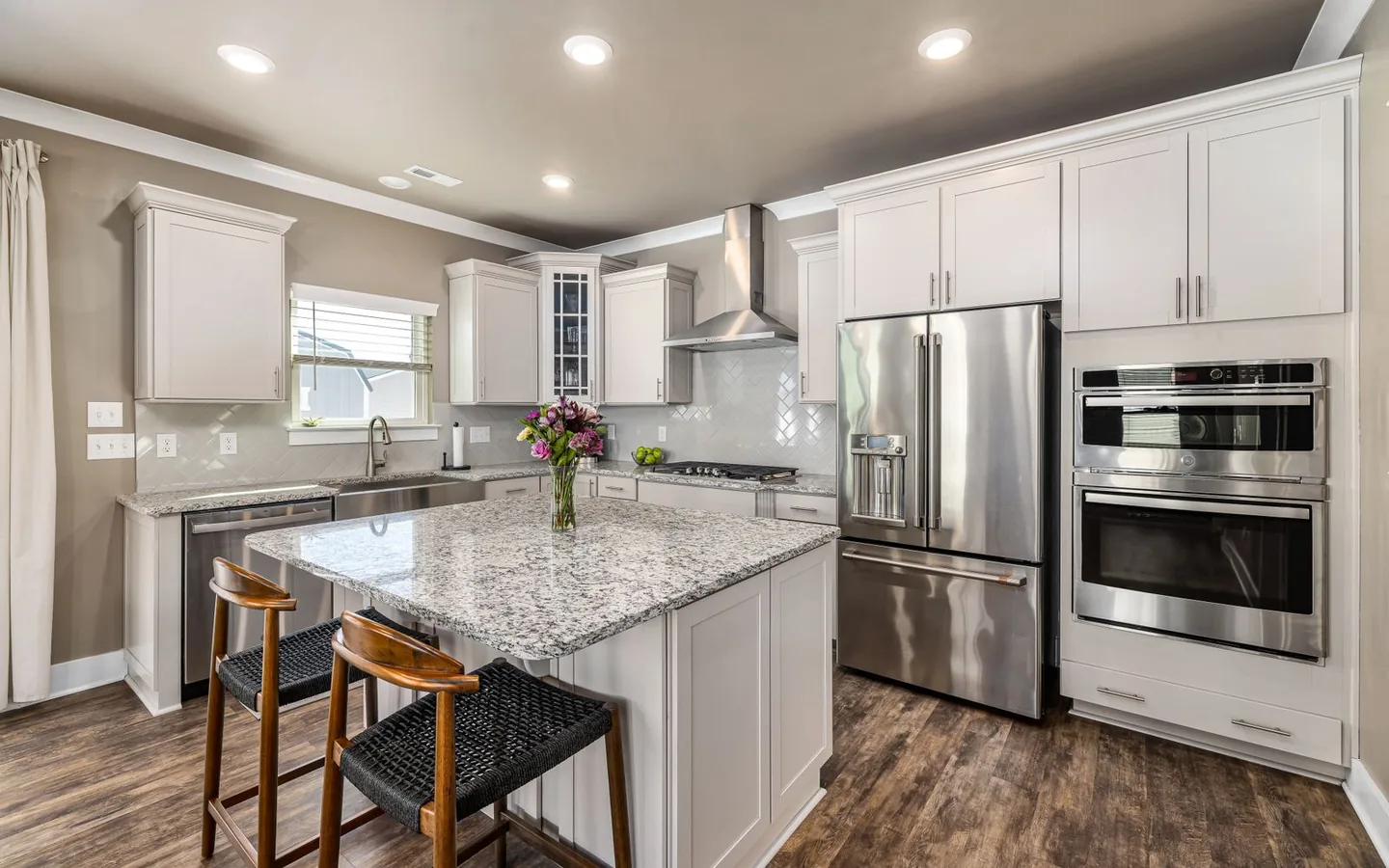
An island for stools presents decisions that a wall run does not. Have the design team confirm how the proposed top will be supported. A support visible from the dining room may influence the cabinet arrangement, and a bracket can take space somebody thought was available for their knees. If a section of counter must be carried through a narrow turn, ask how the slab or other surface will reach the room. The answer may determine where a seam goes. A helpful installer can show how the tradeoffs affect appearance, use, and reliable assembly before the surface is cut.
Compare ownership of a small mark
Ask each supplier to describe what happens to one common kind of damage. A wood surface might accept a local repair or need attention over a wider area to give an even finish. A visible chip at a stone edge may be repairable to a different degree from a broad dull patch. Plastic laminate can retain its original pattern well in normal use, while a severe cut through the decorative layer may be difficult to disguise. Think of the response in practical terms. Would you leave the mark, schedule a repair, or worry about it every time you stood near the sink?
Use samples to judge visual tolerance under typical light, with permission for any wear tests. Look at fingerprints and a few drops of water, observe whether the sample looks clean after the specified wiping method, and leave more involved testing to the supplier. Run the candidates past somebody who uses the kitchen differently. If one person values a uniform surface and another likes variation, look for the compromise where both will see it. A broad, quiet preparation run can coexist with a more expressive counter on a piece of furniture or an island, with some care about how the two meet.
Approve a countertop you can describe later
A final decision should leave you with a written record of product and finish, the relevant lot or slabs, thickness, edge details, sink information, and approved seam positions. Confirm the method for care questions and warranty claims. Ask what changes if site measurements reveal something unexpected and how you will review any revisions. Save the actual sample until you can compare it in the installation. Some variation is expected across certain materials and finishes, and the documents should make clear what you approved. Record the source of any special cleaners or care products so the next person can find them.
Finish by walking the planned kitchen as if the evening has already begun. Picture a pot of pasta at the stove and a wet cutting board beside the sink. Put the trivets and towels where hands will reach for them. If a material choice only works on the condition that everyone behaves differently, decide whether the new layout makes the change plausible. Worktops that make the easy habits safer for the surface tend to age more gracefully. The right selection comes with a good installed detail, an honest cleaning routine, and enough useful space for the activity you bought it to support.