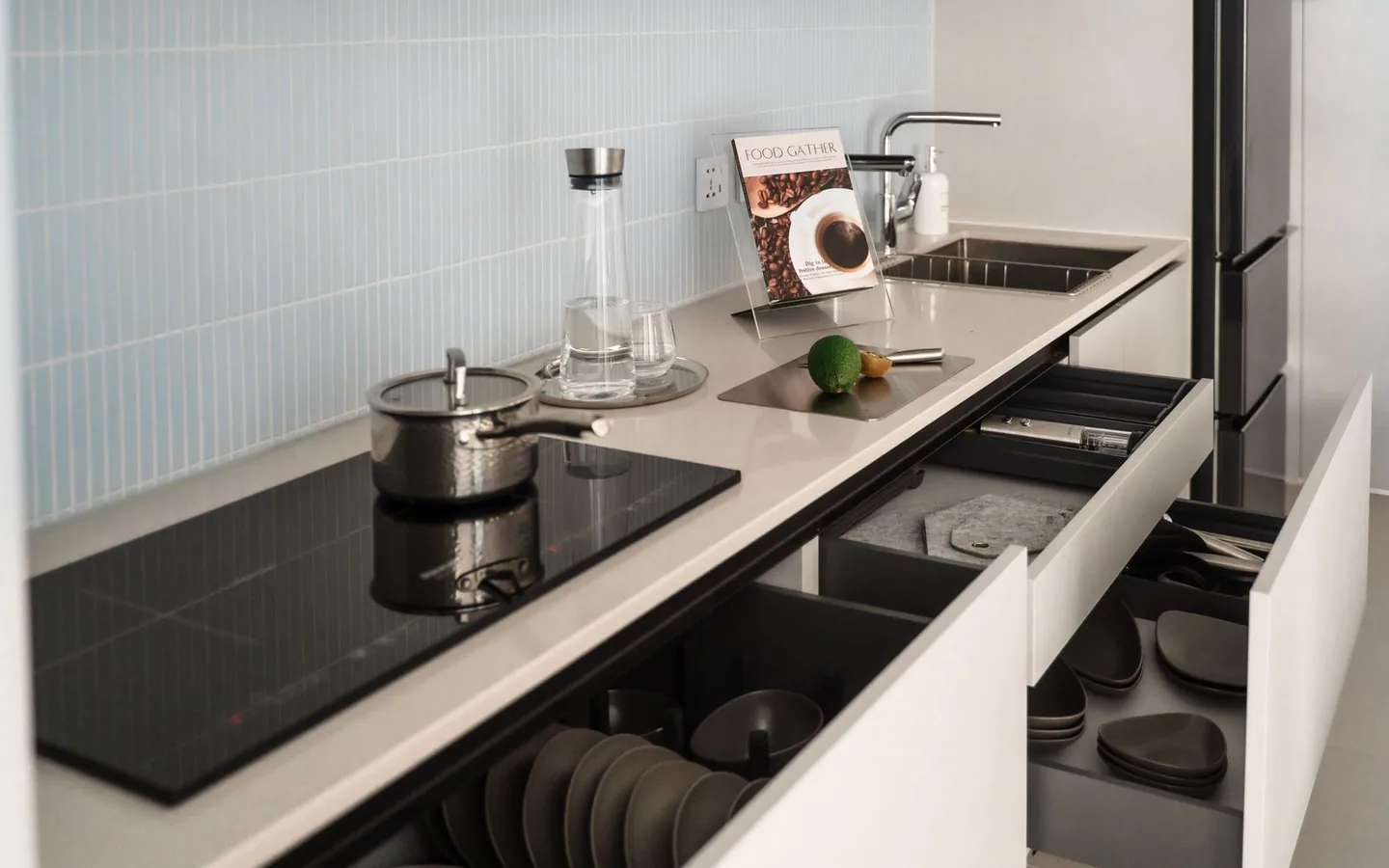
How to Choose a Kitchen Sink for the Way You Wash
Compare sink bowls, materials, mounts, and taps by testing the largest things you wash and the space you need below the counter.
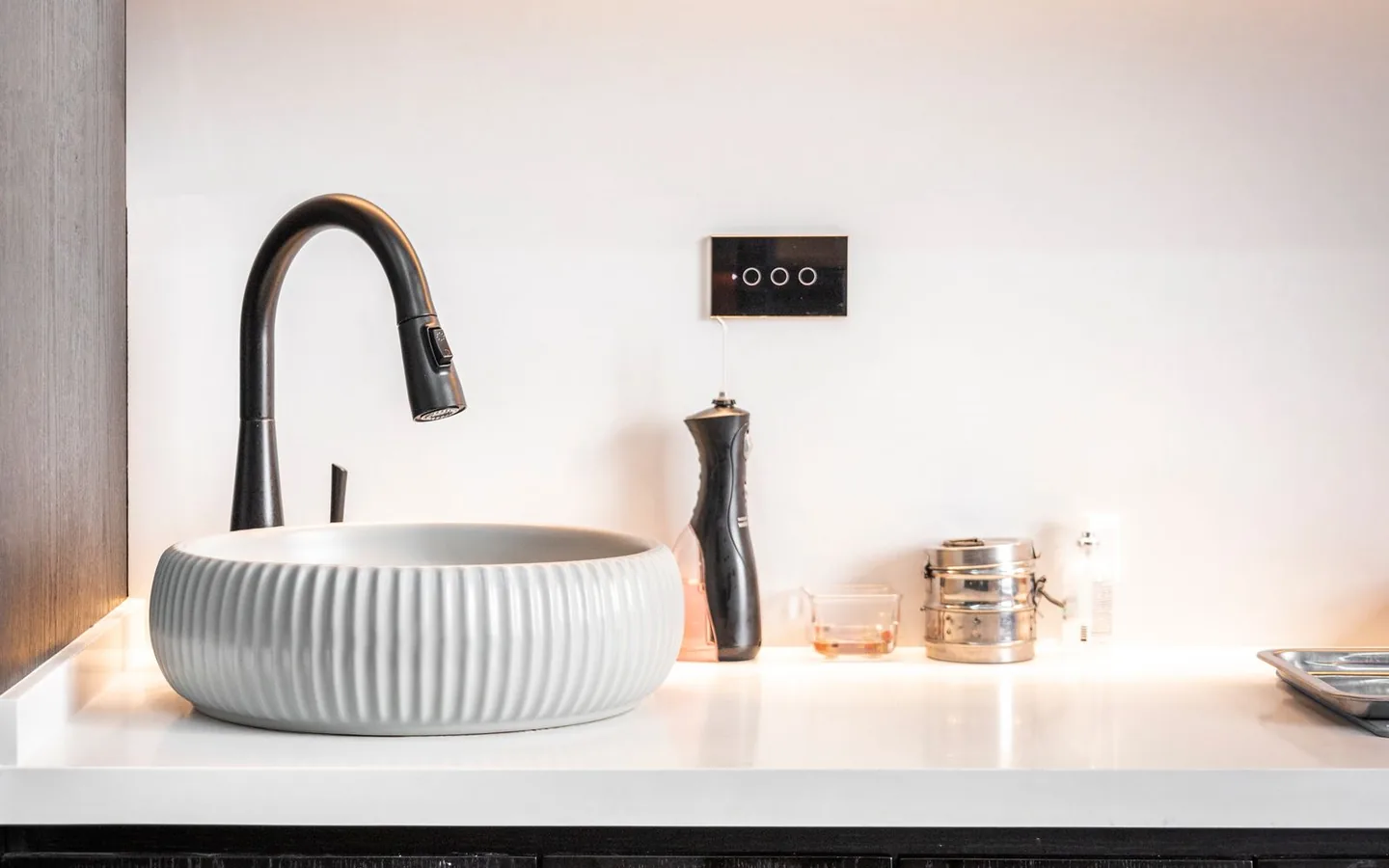
Choose a kitchen sink that fits your largest routine washing task, then test tap reach, splash, counter support, cabinet space, and maintenance.
Bring the largest pan into the decision
Take out the tray you wash after roasting, the largest pot you fill, and the rack from the appliance that needs a weekly scrub. Put them near the current basin. The difficult object can reveal more about the sink you need than a wall of displays. It may be the width of a tray, the angle of its handles, or the height of the tap that makes the job awkward. Identify which part of the movement you want to fix.
Imagine washing that object with the next sink's usable dimensions, including rounded corners and any divider. The outside size includes a rim or parts that do not hold a pan. A bowl with wide upper dimensions can narrow sharply toward the bottom. Ask for technical drawings or test the object against a display. A measurement across the opening may not tell you where the pan will be while you reach for the spray.
Consider the jobs that do not involve large cookware. Some people hand-wash delicate cups or frequently rinse fruit in a bowl. Others use the sink mostly to prepare food or clean a board before it reaches the dishwasher. Look at those smaller tasks too. A cavernous sink is valuable when it supports your actual work, though its depth or extra width can be unnecessary for somebody who mostly rinses light pieces.
Decide how you want to separate work
A single bowl gives a continuous area that can accommodate wide pieces. It also means that clean produce and soaking cookware share one bowl unless you use an insert or separate basin. Draw a current cleanup session and count how often you wish you had a second wet area. If that happens only occasionally, a removable container might provide enough separation without changing the sink.
Two equal bowls suit tasks that routinely go on at the same time, provided both bowls are large enough for the work expected. An unequal arrangement can leave a larger main sink and a small place to rinse or drain. A divider makes something easier and takes away continuous area. Check how far it rises and which tray really fits across the result. A sink that looks like one broad rectangle on a website may use its interior in two much smaller pieces.
Decide where wet things end up after washing. An integrated drainer occupies a permanent part of the counter and gives drops a clear route. A separate rack uses space only when set up. The surface at the counter edge and the way a rack sits can affect where water collects. Give dish drying a position in the plan instead of assuming the old layout will automatically follow the sink.
Find a comfortable working height and reach
Stand where you would naturally wash at the proposed counter height. Extend your hands toward a mark at the depth of the bowl. See what that reach feels like after a short simulated cleaning motion. A deep bowl can help contain large pieces and splashes; for somebody who stands a long way from its bottom, it can also mean repeated bending. Different household members may experience the same depth differently.
Check the front setback. A counter edge, cabinet face, or handle can position you farther from the bowl than it seems on paper. A sink near the leading edge can be easier to reach but leaves a particular width of material in front. Ask the countertop supplier and cabinet installer what the selected material and support require. If you need easier seated access, get advice for the whole sink and cabinet configuration.
Think about the sink as a station with a small constellation of things. Detergent, brushes, and a towel should be easy to reach without a broad spread of objects at the back. If you store washed pieces on the right, a pull-out bin on that side may interfere at the same hour. Walk through the working positions with someone else using another part of the kitchen. You are checking the space people occupy as well as the sink dimensions.
Compare the visible materials under ordinary use
Stainless steel can look different according to its finish and shape. Check the sample at a slant and run a damp cloth across it if the supplier allows. Surface marks may become part of its appearance over time. Choose a finish you can imagine under daylight near a window as well as bright showroom lighting. Ask about suitable cleaners and how the specific sink should be cared for.
Composite and ceramic options can create a different color field against the counter. The material name alone tells you little about the individual product's care, weight, or response to impact, staining, and temperature. Ask for the manufacturer's information and examine a large sample if possible. A surface that appears matte in an image may reflect more than you want once a light washes across it.
Compare the inside corners and bottom shape. A sharp-looking modern bowl may have inner corners that take a little more attention during cleaning. A softer shape may be easier to wipe yet reduce space for a square tray. A quiet sink is also a subjective decision. If you can handle a working display, listen to water and the sound of setting down cookware. Find the tradeoffs that correspond to your repeated use.
Study how the edge meets the countertop
A sink rim above the counter gives the installer a different junction from a bowl mounted below it. Look closely at a display and feel what you would be wiping over or around. A fitted installation can have parts exposed at the edge of the opening, and different counter materials have their own requirements. Ask the suppliers to confirm the compatibility, support, and installation method for the exact pair you choose.
An integrated arrangement can reduce certain visible joints, but it brings its own service and replacement considerations. If you expect to change the sink separately later, ask how difficult that would be and whether the same dimensions are likely to be available. The labor needed to replace an item with a particular cutout is part of its long-term usefulness.
Give the tap and accessories their own measured space at the back. A tap lever can need extra depth when it is open. A window or sill could restrict a tall spout. A sink with an attached deck might fix the position of holes that would otherwise be flexible. Compare the maker's drawings for the sink, tap, and countertop, including the space underneath where the components and connections actually sit.
Choose the tap with the water path in view
A tap that projects too little may send water toward the back, leaving limited room for hands or dishes. A long or tall one can affect splash and sometimes pass beyond a small bowl. Mark where the water is intended to land, and check the path of a movable spray head where applicable. A flexible spray can help in a broad basin provided the hose has room to travel.
Check how the taps work with the sink's overall routine. A lever that can be reached with an elbow or wet hand may help when preparing food. Different households will care about the ability to fill a large pot, change the spray pattern, or reach both bowls. Look for an actual display or ask the supplier which tap and bowl combinations have been designed to work together.
Plan how the installation will use the cabinet underneath. Waste fittings, valves, filters if selected, and moving spray hoses can take up the same space you wanted for a bin or shelf. Ask the plumber and cabinet designer to draw or lay out the important parts. Avoid tightly enclosing something that needs service. A small change of bowl or drain position could leave your lower storage easier to use, subject to the chosen products and installation.
Walk through the choices one last time
Set the sink, tap, and counter on one list. Include actual model numbers, visible finishes, cabinet opening, accessory positions, and the intended use of the under-sink space. Confirm who checks the installation and which measurements must be verified before the counter is cut or ordered. A defined model helps avoid a large amount of confusion when retailers sell several very similar sizes.
Consider a normal afternoon with the room finished. A large pan soaks while somebody fills a glass, a clean plate waits for the rack, and a child passes behind you. See whether each thing has a plausible place. A complicated feature can be worthwhile if it makes a repeated job smoother. It matters less if you have to arrange everything around it before the sink becomes useful.
Keep the final care and accessory information after installation. Try the sink with the large object that started the selection and see where the water lands under the usual flow. If anything about drainage, connections, or fit needs adjustment, bring it to the appropriate installer. A good match is a basin you can use without having to think very much about the decisions behind it.
If you regularly wash items by hand, give yourself a few minutes to see where clean and dirty parts wait during the job. A tray you can take out and put away can be enough to handle the extra load. A cloth always finding its way onto the counter may be evidence that the drying setup is missing a useful edge or surface. Fix that detail while the decisions remain easy to coordinate.