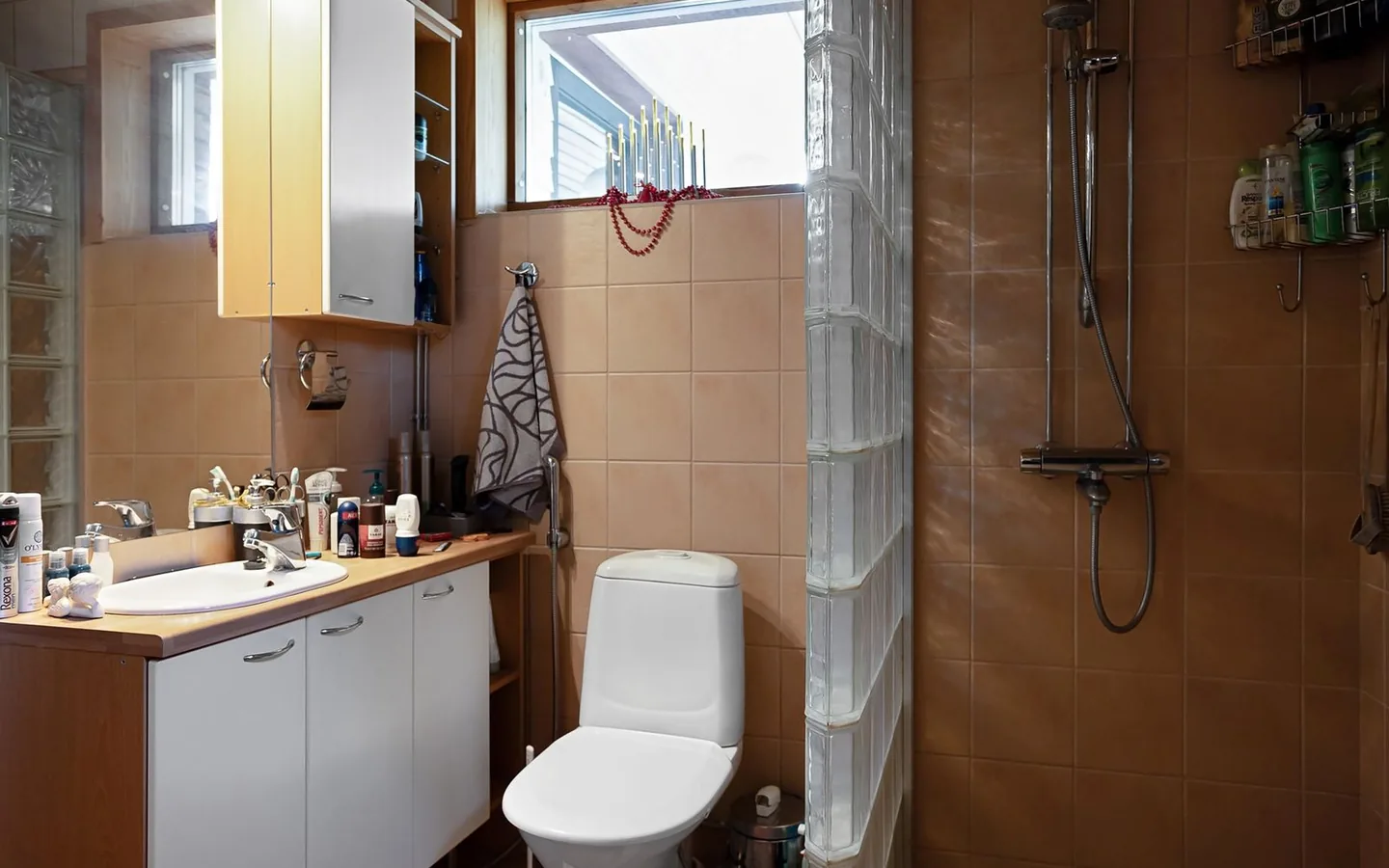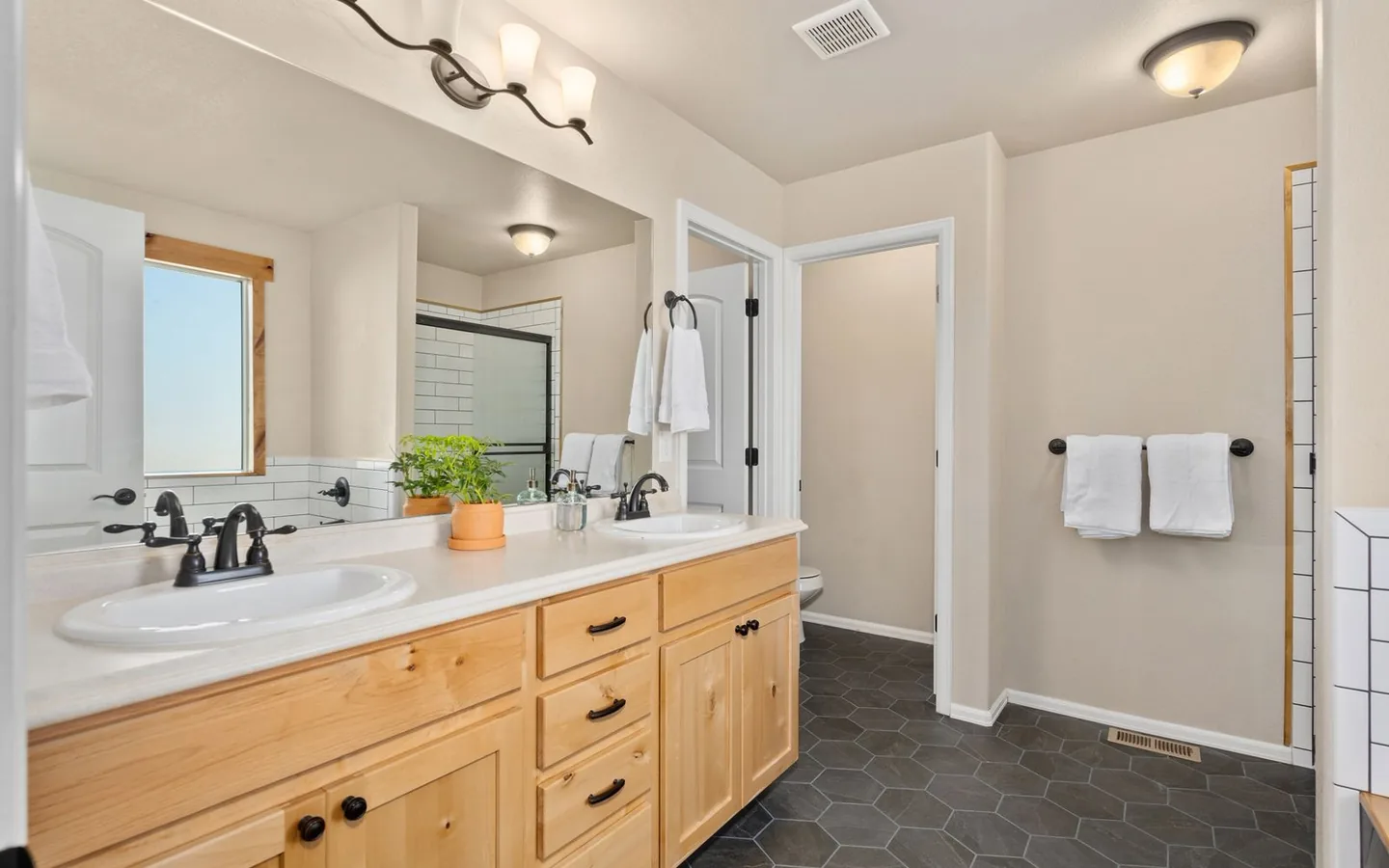
How to Plan Bathroom Mirror Lighting That Helps You See
Test face lighting, reflection, glare, controls, and fixture placement from the positions people actually use at the vanity.
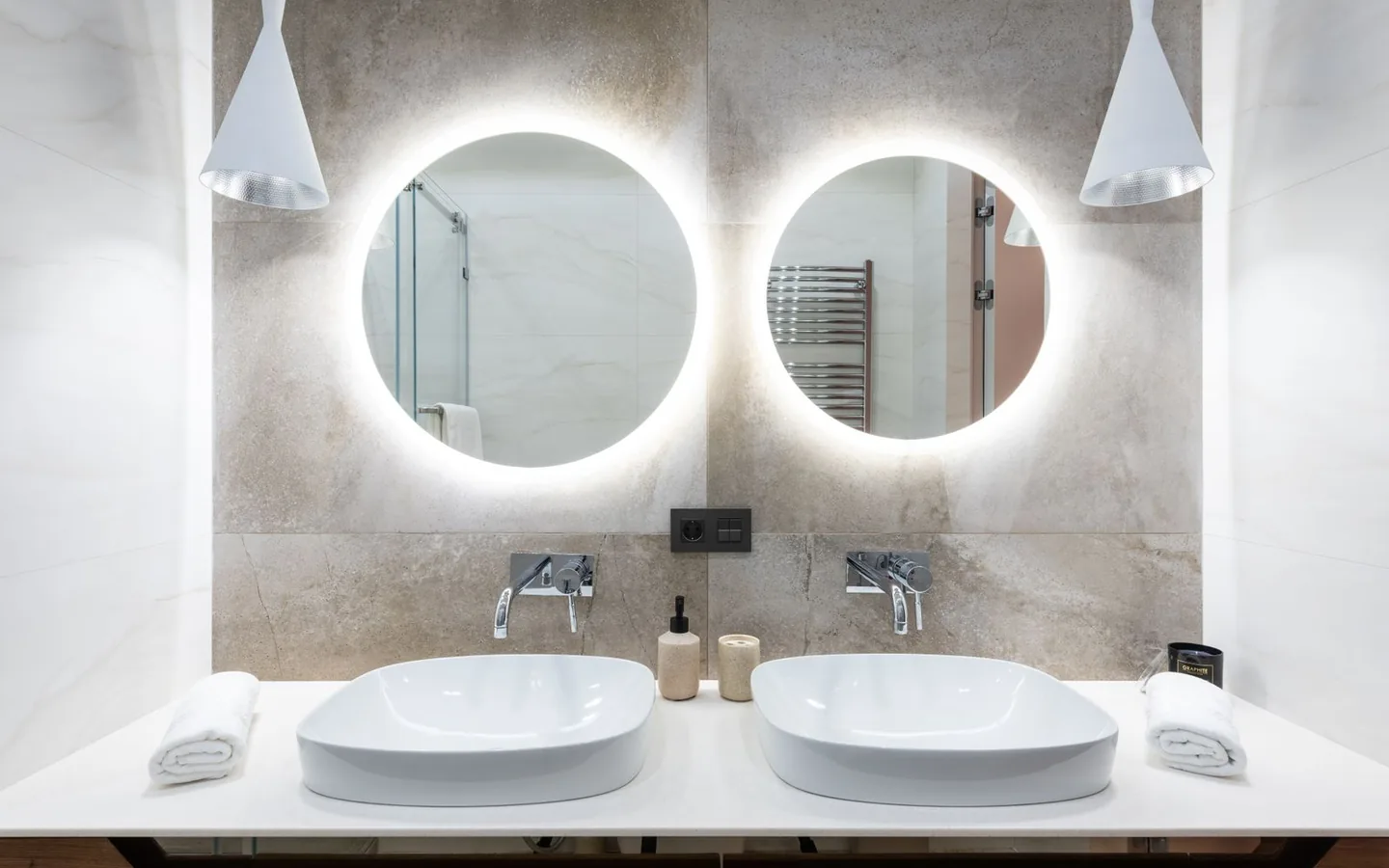
Plan bathroom mirror lighting at the user's eye level, check both sides of the face and the reflected view, and confirm fixture suitability with the electrician.
Stand where your face will be
Turn on the existing bathroom light and look at both sides of your face. Notice which details are easy to see and which disappear beneath a shadow. A room can feel very bright while the mirror remains awkward for shaving or getting ready. The wall, ceiling, and vanity may be lit, but the mirror task depends on light reaching the person at the sink.
Try the view at your normal distance. People often lean toward a mirror from behind the edge of a basin. This can move their face under a fixture or change which source is reflected directly back at them. Sit or stand at the position each user expects. If the mirror needs to work for people of different heights, mark the approximate eye levels on the drawing. Give a strong priority to the ones who spend time there every day.
Decide what other jobs the light will do. A vanity light can turn into the first light anyone uses on entering, or it may be for focused work only. A soft reflected glow can be enough on the way to bed while offering little detail for tasks. Describe the difference between each demand so the right fixture can be assigned to each job.
Try side, top, and combined light
A pair of sources at the sides of a mirror can light the face more evenly than a small source directly above it, depending on the fittings and positions. Try the arrangement using a safe temporary light suitable for the location, supported independently and kept out of wet areas, or ask a lighting showroom to demonstrate it. Change one thing at a time so you can tell whether the difference came from the position or the fixture itself.
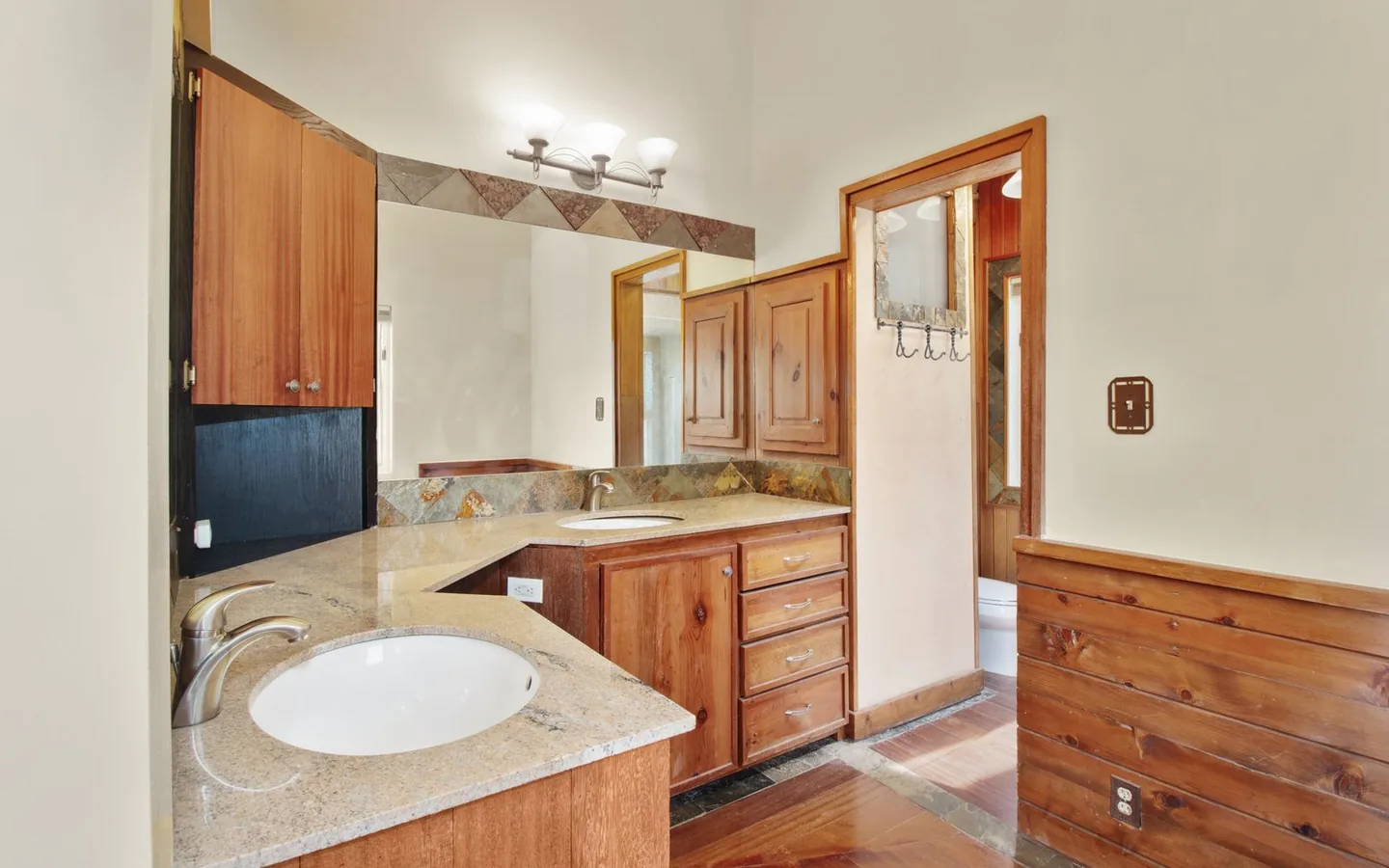
An above-mirror fitting can suit a narrow wall or preserve space beside a cabinet. Check the size and spread of the actual light. A broad source may behave quite differently from a narrow spot set in the same place. Assess shadows around the eyes and underneath the chin and see whether the result supports the tasks you named. If a wall treatment limits side fixtures, consider lighting with a suitable front-facing shape.
Use the rest of the room when comparing. A ceiling source can provide useful fill for walking, cleaning, and seeing what is in storage. At the vanity it might also cast a shade when you lean forward. See what happens with it turned on and off. A useful combined arrangement has a setting you can reach quickly, without making somebody remember a complicated sequence of switches.
Look at the mirror as a reflective surface
Stand at the doorway and approach the sink slowly. Watch for a bright source reflected along the way. A lamp that does not shine directly into your eyes can appear in the glass from another position. Look behind you as well. A small ceiling source, a window, or the light from an open doorway can show up more strongly than expected in a large mirror.
Check glasses, shiny tile, and fixtures as part of the trial. A light might produce an appealing reflection on one surface while making it difficult to concentrate on your face. Lamps with a diffusing cover and an appropriate position can help soften a bright source, depending on the room. Compare the visible area of the diffuser and how much glare you see when looking in the normal direction.
If the mirror changes, repeat the checks. A taller piece can catch a light that was previously outside the glass. A cabinet with mirror fronts can reflect a different point when it opens. Give the designer the actual dimensions, not a generic symbol. Ask whether a different speaker, switch, shelf, or tap needs to share the same strip of wall before you are committed to the widest mirror that can nominally fit.
Arrange general light and mirror light for different times
Write down an early morning, a cleaning session, and a late evening in the room. You may want enough light to walk around without using the brightest vanity scene late at night. Cleanup needs attention across the floor and into corners. A task at the mirror may call for more than either. If these needs are distinct, talk to the electrician about appropriate controls and circuit arrangements for the selected fixtures.
A dimmable fixture can make transitions easier if the chosen equipment works well across the range you want. Ask about compatibility and whether matching fixtures will respond consistently. Try the lowest setting in a similar room when you can. A light can be less useful at very low levels if it flickers or changes in a way that bothers the person using it. A purposefully separate low-level light is another option to discuss.
Place controls where people already expect to find them or where an obviously different arrangement will be easy to learn. Avoid routing normal bathroom use through a sequence only one person remembers. Ask the electrician to confirm proper location and suitability. A familiar control near the usual route can serve a late visit better than a complicated scene nobody remembers how to start.
Take finish and color samples to the fitting
Light can change how a cream or gray tile looks. It can also change the way a person's skin or makeup appears in the mirror. Test samples together if those judgments matter to the household. Use the actual lamp or manufacturer information to compare choices and look at the materials close to the location they will occupy. A small finish sample near the mirror can show interactions that are hard to imagine from separate pictures.
Look at the choice against the next room as well. A strong color difference at the doorway may be dramatic during the day and distracting at night. The bathroom can still suit its own routine. Checking the common settings side by side helps you decide whether you want a gradual transition or intentionally different light on each side.
Note when daylight influences the result. A vanity that works beautifully with a window on one side may need more even support after dark. Compare morning with evening, and consider any blinds or privacy treatments you actually use. A translucent covering can change both the light and the reflected view. Base your decision on the condition that currently makes the task difficult.
Keep the fixtures, glass, and joinery coordinated
Draw the mirror, wall lights, vanity, storage, and hardware at their actual size. An open cabinet door or a high tap can change the space around an otherwise straightforward mirror. If the wall also holds an outlet where permitted, drawers, or a shelf, show those too. Narrow wall fittings can need more space at their edges for mounting and access than the visible shade suggests.
Discuss the fixture location with the electrician before buying. Ask about the rules for the site, the room's wet areas, and the equipment suitable for each position. Identify how fixtures and any related components will be reached for service after the wall is finished. A clean line on a bathroom elevation is less useful if a common repair requires taking down other parts of the room.
If you are considering an integrated mirror light, check how much of its light lands on the face of the person at the sink. A soft strip at the back may be beautiful and offer little useful front light. Compare it with an illuminated design that directs light outward, or a separate task fixture. Check the replacement arrangements and the approach used for connections before finalizing the specification.
Try the finished setup in a normal routine
Once it has been properly installed and checked, use one light at a time in the room. Check the view at your usual distance from the glass, then turn toward the towel and cross to the door. Then turn on your usual group of lights. If an issue appears, record the source, what the mirror reflects, and where the person stands. Those details give the installer or designer something to address.
Ask everyone who uses the room which setting they reach for. A brighter source may only need a change in control, while a darker region could be a matter of position or selection. Look for shadows introduced by items that were not in the room before, like a tall soap dispenser or a new cabinet. Moving one object can occasionally solve a small problem in a way that changing the lighting cannot.
Put the fixture references and operating instructions with the other finish records. If equipment relies on replaceable parts or a particular compatible control, keep those details easy to find. A good mirror light becomes an unremarkable part of the morning. It lets people see what they are doing without a bright point taking their attention away from the task.
Decide where the brightest moment belongs
If the room is mostly a place to wash and get ready, the light at the mirror may do a lot of the visible work. If the bathroom includes a space for a quiet bath or opens directly onto a bedroom, more of the evening experience may depend on keeping that mirror light off. Think about the everyday transition before choosing how much light to provide at the vanity.
The same approach works in a tiny bathroom. A single appropriate fitting can sometimes make the space comfortable if it reaches the right place. If the room needs a separate approach for the mirror, make that choice on the strength of the test and the installation review. Size alone says little about where the light will be most useful.